Keeping Mildew Out of a Florida Bathroom Between Cleanings
By Peridot Cleaning Company · · 4 min read
Part of the guide: The Complete Tampa Home Cleaning Guide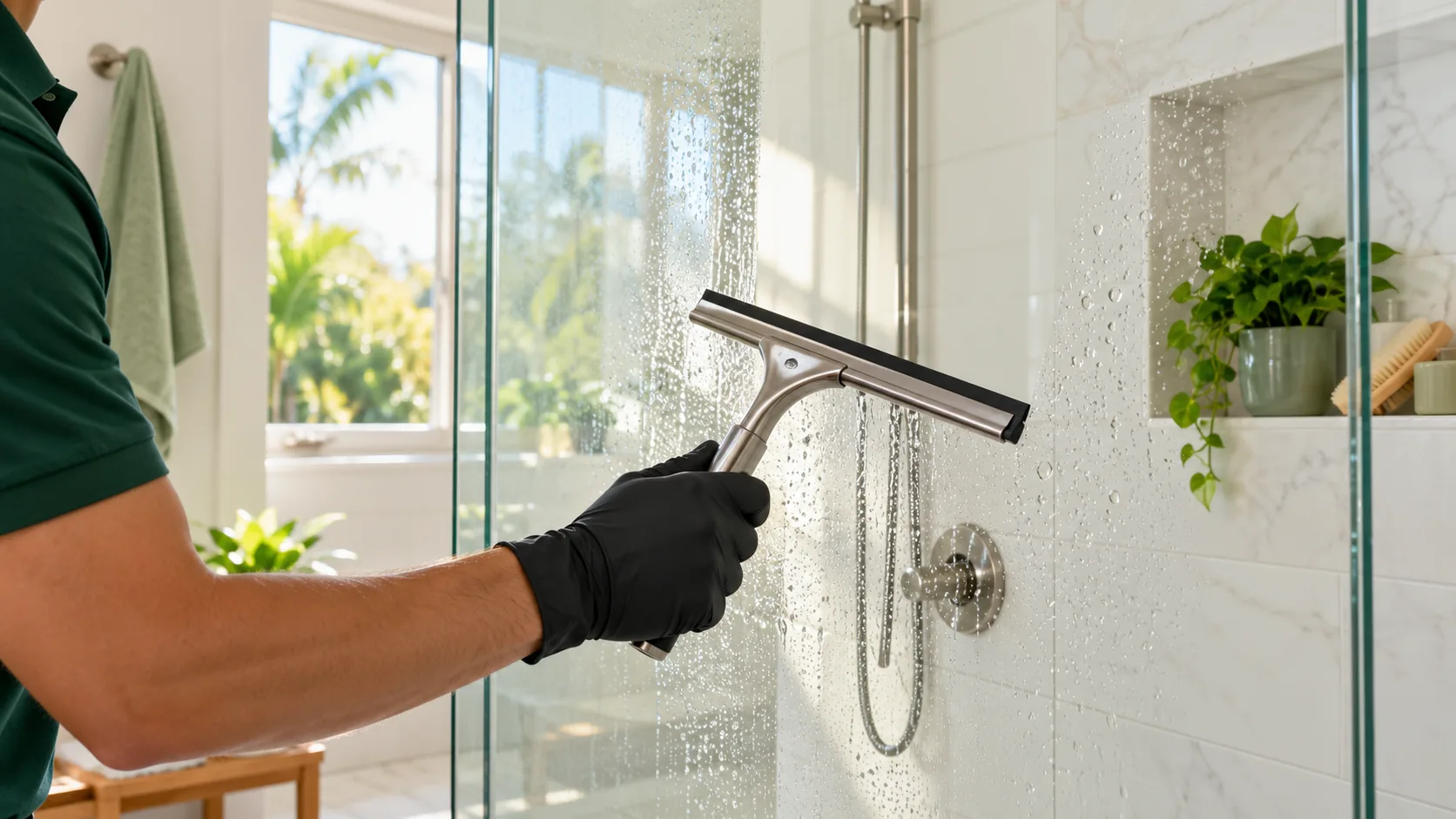
To keep mildew out of a Florida bathroom, remove the moisture it feeds on: run the exhaust fan during and after every shower, squeegee wet surfaces, and clean grout and caulk on a regular schedule. Mildew needs dampness, so anything that gets the room dry faster, and keeps it dry, works better than any product.
In Tampa Bay, humid air makes that harder. Even with the AC running, a closed bathroom can stay damp for hours after a shower. Here is how to stay ahead of it.
Why Florida bathrooms get mildew so easily
Mildew is a surface fungus that grows where moisture, warmth, and a little food (soap film, skin oils, dust) come together. A Florida bathroom has all three, and the humid air outside makes it harder for steam to leave the room. If you want the bigger picture of how humidity affects the whole house, our guide to cleaning a Tampa home covers it.
The usual starting points are shower grout, the caulk line where the tub or shower meets the wall, the bottom of the shower curtain, and the corners of the ceiling above the shower. Pink or black spots in those places are the first sign.
Dry the room: the habits that matter most
- Use the exhaust fan. Turn it on before you start the shower and leave it running for about 20 to 30 minutes afterward. If the fan seems weak, hold a tissue to it; if it does not pull the tissue, the fan or its vent may need attention.
- Squeegee after showers. Wiping down glass and tile walls takes about 30 seconds and removes the water that would otherwise sit on the surface and in the grout lines.
- Hang towels so they dry. A damp towel left in a heap keeps the room humid and can smell musty. Spread it on a hook or bar, and wash towels regularly.
- Leave the shower curtain open. Spread it out after use so it dries instead of staying bunched and wet.
- Keep the door open and air moving. Once you are done, open the door or run a fan so the room can exchange air with the cooler, drier AC air.
Quick check: if the bathroom mirror is still fogged more than a few minutes after you leave, the room is holding too much moisture. Run the fan longer.
Take care of grout and caulk
Grout is porous, so it soaks up moisture and soap residue. Caulk can crack or peel over time, letting water get behind it. Both are where mildew likes to settle.
- Scrub regularly. Use a soft brush and an all-purpose bathroom cleaner on grout lines every week or two so film never builds up.
- Check the caulk. If it is cracked, peeling, or has dark spots that do not wipe away, it is usually better to replace the caulk than to keep scrubbing.
- Dry tough spots. After cleaning, wipe the area with a dry cloth so you are not leaving moisture behind.
- Consider sealing grout. Sealing can help grout resist moisture. Follow the product's directions, since cure times vary.
Safe products to use
Most light mildew comes off with an all-purpose bathroom cleaner and a little scrubbing. For stubborn spots, use a cleaner labeled for mildew and follow the label for contact time and ventilation.
Safety: never mix bleach with ammonia or vinegar, because the fumes are dangerous. Use one product at a time, rinse well, and keep the room ventilated while you work.
Natural stone such as marble or travertine can be damaged by acidic or harsh cleaners, so check what your tile is before you pick a product.
When mildew keeps coming back
If mildew returns in the same spot within days, look for the cause rather than cleaning harder. Common culprits are a weak or blocked exhaust fan, a slow leak around a fixture, failing caulk, or a bathroom with no window and no ventilation. Dark growth that spreads across drywall or ceilings, or a musty smell with no visible source, is worth having a qualified professional look at. This is general cleaning advice, not a substitute for a home inspection.
How a recurring cleaning schedule helps
Mildew is much easier to remove in its first week than after months of buildup. With recurring cleaning, bathrooms are scrubbed and sanitized top to bottom on a regular schedule, so soap film and early mildew do not get a foothold. Your daily drying habits do the prevention, and the visit handles the scrubbing.
If a bathroom already has heavy buildup, a deep cleaning is a good reset before you move to a regular schedule. For the habits that fill the gaps between visits, see our guide to keeping your house clean between professional cleanings.
A simple weekly bathroom routine
- After each shower: fan on, squeegee glass and walls, spread towels and curtain.
- Once a week: wipe the sink, counter, and faucet, and scrub grout lines in the shower with a soft brush.
- Once a month: check caulk, wash the shower curtain or liner, and clean the fan cover so it can move air.
- Any time you see spots: deal with them early, before they spread.
Keep it up and the bathroom stays fresher with much less effort, even through Tampa's long, humid summers.
This article is part of The Complete Tampa Home Cleaning Guide. Humidity, mildew, pollen, lovebugs, sand, and hurricane season: how to keep a Tampa home clean through every season and every move.
Get your free cleaning quote
Answer a few quick questions about your home and see your price instantly — no phone call or in-home visit needed.
Frequently asked questions
Control moisture: run the exhaust fan during and for 20 to 30 minutes after showers, squeegee glass and tile, spread out towels and curtains, and scrub grout lines regularly.
Grout is porous and holds moisture and soap film. If it returns quickly, check the exhaust fan, the caulk, and for any slow leaks, and dry the area after cleaning.
No. Never mix bleach with ammonia or vinegar, because the fumes are dangerous. Use one product at a time and ventilate the room.
Wipe surfaces and squeegee after showers, do a weekly scrub, and consider recurring professional cleaning so buildup never gets a start.